When we purchase a product at a near-by store, not many of give much thought to how or where that product came from. Who cares? We are more excited about experiencing that product! However, it is incredible to see how far that product has traveled the world and how many hands it has changed in its journey from being raw materials to that finely packed item you are holding. The world of supply chain is an incredibly complex drama with many actors, big and small. It is a dynamic network of organizations, people, technologies and information. A boring day is an excellent day on this side of the things. The traditional supply chain challenges are further accentuated in the case of cold chain – a temperature-sensitive supply chain used for perishable products such as meat and drugs. Cold chains are to be critically. Cold chains are a complex distribution process that must constantly measure, analyse, control, document and validate products, with absolutely no room for error. Failure to do these activities could have serious consequences such as inactive drugs administered to critical patients. It could also lead to erosion of brand trust, loss of revenue and costs associated with legal issues for businesses. Conformity to contractual terms are often defined by loss of time, money and seriously strained partnerships.
Issue of Trust
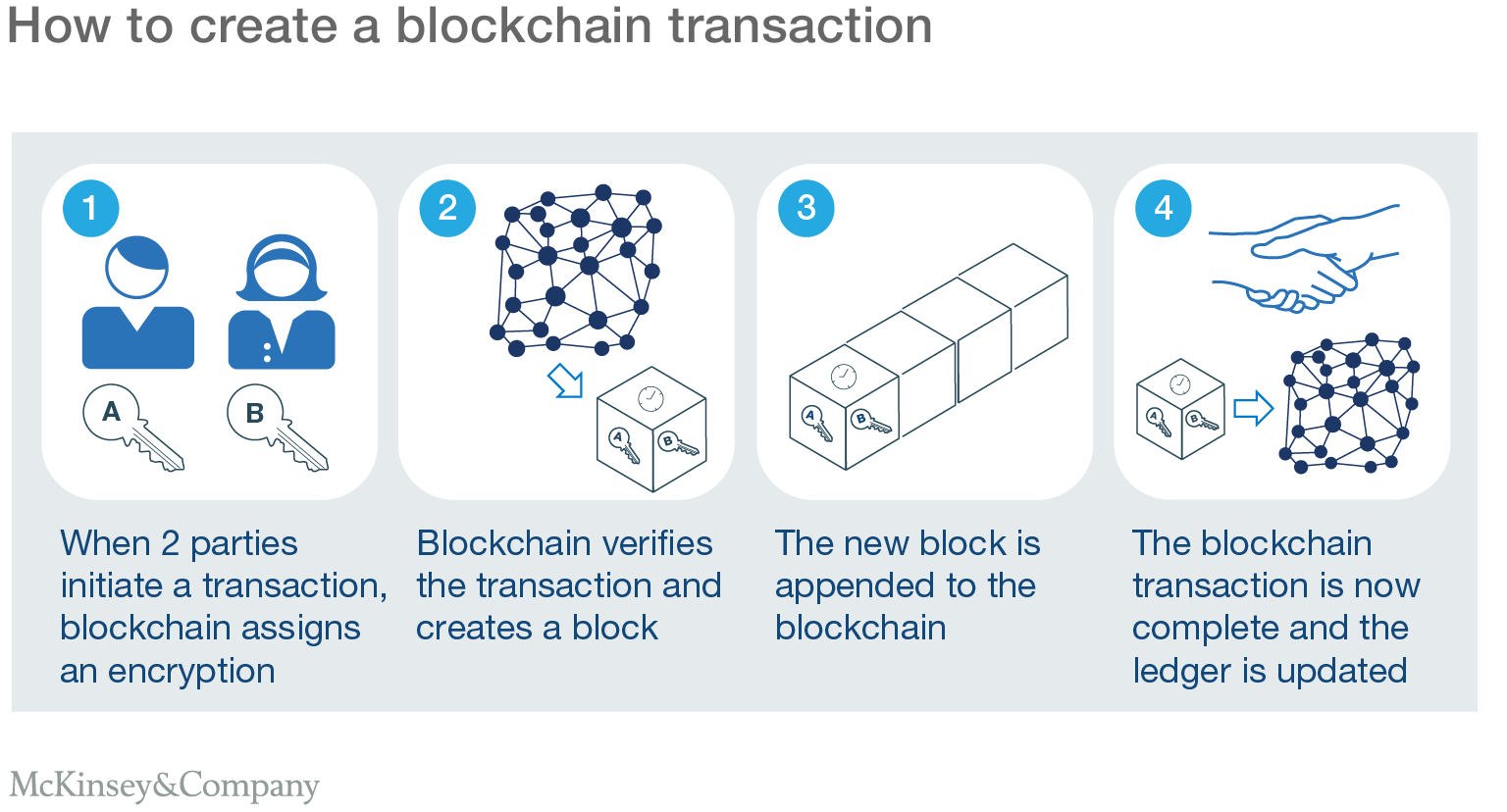
Traditionally, in cold chains the temperature is measured and stored using sensors and data loggers fitted to the pallet. This data is then downloaded from the logger at the receiving end and analyzed for temperature anomalies to make guesses on the quality of the product. Also, the data at each node of the supply chain is stored in silos at physical locations and supported by incompatible software. Due to high liability costs associated with mismanaging goods, a business owner has every incentive to commit fraud by tampering with the data. As a result, there is a general lack of trust among various entities due to unavailability of a single trusted source of records. This issue can be addressed by using Blockchain, the core technology behind cryptocurrencies such as the famous Bitcoin. Simply put, Blockchain is a decentralized method of authentication and storage of transactions not on a single server but on every node in the network. Any time any node tries to tamper with the data, the fraud is immediately flagged by other systems in the network. A problem with any one node would not bring the entire structure down. As a result, the data stored on a Blockchain is very secure and accessible. In the case of cold chains, a dedicated Blockchain can bring a new level of transparency. At any point, all parties have access to the same secured data. With the use of IoT and Blockchain, movement through the supply chain can be precisely monitored by all parties. At the end of the journey, the customer can learn about the products’ health from dispatch to delivery, including temperature history, location, chain of custody and even storage conditions.
Transfer of Responsibility
The other issue with traditional cold chains is the lack of accountability. As the consignment changes hands multiple times, there is no clear transfer of responsibility. With no mechanism of consensus at the time of hand-offs, it is very difficult to identify who was responsible for a failure. This is a major blind spot during the ‘last-mile’ delivery, especially in developing nations where the transportation infrastructure is not advanced. More importantly, organizations miss out on the opportunity to fix the issues. However, Blockchain allows supply chain actors to transfer ownership of the consignment through clear record-keeping. During this transfer of responsibility, the recipients, by being fully aware of the facts, consciously accept or refuse the goods. As soon as they accept it, they sign their responsibility. This always makes it possible to know “who is responsible for what” throughout the supply chain.
With the adoption of smart contracts, tedious documentation work can be eliminated, resulting in faster movement of critical goods. One of the biggest problems in supply chain today is overbooking and the consequent rolling. This typically happens when shippers book in excess to compensate for the no-shows. As a result, the senders suffer because their shipment got rolled over to the next dispatch. In a smart contract, both parties deposit a fixed amount of cryptocurrency into an escrow account. When both parties meet the conditions of the contract, the amount is returned. If either of the party violates any condition on the smart contract, the respective party’s deposit will be retained as penalty. This type of system incentivizes both the sender to prepare the consignment on-time for pickup and the shipper to avoid causing disruptions due to roll-overs.
So, not only can Blockchain bring visibility across the cold chain but it can also help steward these products from one destination to the next effectively and efficiently. More importantly, it is a perfect way to ensure that the critical consignments such as vaccines are delivered on time at the right location in the right condition.
 Strategy in the Age of Decentralization