Computer networks of the past were highly siloed and hence, centralized. In centralized systems, the users are tightly controlled to streamline the process or product. The data is also hidden and not shared with everyone. Then the internet emerged and introduced a set of protocols. These protocols defined how data should be transferred and received. In doing so the internet decentralized the network as it eliminated the need for a central authority that would control the network. This provided the developers with abundant opportunities. These opportunities could be used to build applications for businesses to create value and for people to take part in a network that is not controlled or owned by a central authority. Nowadays, there cannot be a discussion on decentralization without talking about Blockchain and Ethereum technology. One of the earliest principles of Bitcoin’s blockchain technology was the ability to conduct peer-to-peer (‘P2P’) value transfer without ever needing to trust any person.

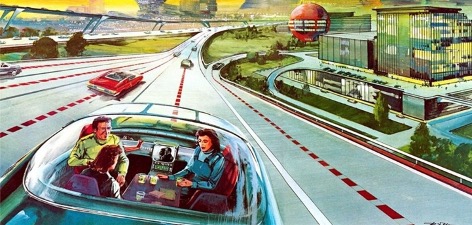
The transportation and automobile industries are currently undergoing their biggest revolution since the invention of Henry Ford’s assembly line. The ever-growing sharing economy business model is revolutionizing industries such as music, office space, transportation and so on. Furthermore, advances in technology and regulations will soon make autonomous self-driven vehicles available to the general public. There is a great possibility that these autonomous vehicles will become an integral part of our daily lives. The movement of people as well as goods will take on a completely new shape. Vehicles and goods will be similar to packets of data which are programmatically sent from origin to destination. This is exactly what the swiss-based Decentralized Autonomous Vehicles Foundation (‘DAV’) is setting-up to do. This would be done using blockchain and smart contracts technology to maintain these interactions on a publicly owned and managed network. DAV may be called an Architectural Innovation.
DAV, a decentralized computer network, will ultimately connect everyone on the network to self-driving vehicles (such as cars, trucks, rovers and drones), enabling them to effectively communicate and transact. Users can have an entire network of self-driving vehicles at their fingertips to bring them anything, or take them anywhere. In today’s transportation market, and during the transitional period before self-driven transportation reaches a mass adoption, the decentralized transportation network and its underlying technology can create a number of economic opportunities. Decentralized on-demand, manned, rides and deliveries being some of them. DAV’s protocol enables people to either utilize transportation services or put their own manned or autonomous vehicles on the network. This will help in creating a decentralized P2P transportation ecosystem. Both the stakeholders of the network, the drivers and passengers, can now communicate directly with each other using Blockchain technology. There will be no middleman taking away any part of the revenue. This will create more value for the users of the network. Decentralization has a great impact on the creation and redistribution of value. Value keeps evolving so in the future we can again expect redistribution. Users will also be able to send and receive packages by using the network with decentralized manned deliveries.
This decentralized network is built on a framework of open-source software and a free marketplace where anyone can procure and sell autonomous transportation services. The technology is a trifecta of three major components: a) Decentralized Discovery; b) Trustless Cooperation Tools; and c) Communication Protocol. Autonomous vehicles will discover each other, as well as service providers and clients using DAV. DAV implements decentralized node discovery using a P2P protocol that does not rely on a central server. The nodes are listed in a distributed hash table which can be accessed in a very efficient way. The DAV communication protocol defines a group of standardised communication protocols for various transportation situations. The communication mainly happens in two ways. The on-blockchain communication is done directly by smart contracts and through events sent forth by them. Whereas, the off-blockchain communication is done P2P using DAV’s protocols. Trustless cooperation is essential for this kind of arrangement. This is achieved using a series of specialized smart contracts between buyers and sellers of transport services. The smart contracts enable multi-party contracts between buyer, seller, and whenever required, between insurers and other involved parties. These contracts and the DAV token are inter-connected, guaranteeing financial resolution for transactions between multiple parties without requiring any pre-established trust. The DAV token is a utility token and these tokens are not intended to constitute securities and/or collective investments.
Sharing economy companies such as Uber, Lyft, AirBnB, etc. still control their respective apps and pricing, even while providing asset holders more autonomy. Just as a fully centralized system, a fully decentralized system may never exist. DAV is a step towards a more decentralized transportation system that has the potential to become fully decentralised. DAV has a highly optimistic vision of building a global infrastructure for all decentralized transportation services. This may take a long time. However, its real-world application can already be realized now. There will be an opportunity for self-driving vehicle owners to loan out their idle vehicles, and get paid for their use. The DAV network would also allow service providers to use it for services such as cleaning, maintenance and so on. These service providers will also be compensated for these services on the network. DAV has highly aspirational dreams of disrupting the entire transportation industry and in doing so it is creating an ecosystem which will enable the users to use blockchain technology to deliver and procure services. This may open up a lot of opportunities for start-ups however, this will definitely lead to loss of jobs in various fields. It will also create legal risks and challenges such as insurance issues for self-driving cars. It is the responsibility of all the stakeholders involved to ensure that these challenges are mitigated. The DAV network has the potential to be highly and readily adopted by the public who may pressure the advent of relevant regulations. Elimination of the middle-man will also create more value for the multiple faces of the network incentivising more participation. This will add on to the network effect adding to the DAV’s potential growth.
There will always be debates around centralized versus decentralized authority. The main one being who has the ability and the right to make choices and ultimately the decision. The decentralized system may have an answer to this due to its competitive edge over existing highly centralized systems.
Sources:
https://blog.inovia.vc/the-center-cannot-hold-1343628f9f50
https://blog.inovia.vc/the-advent-of-decentralized-transportation-systems-d62a83d3903b
 Strategy in the Age of Decentralization
Intelligent blog, written after full research. Liked it!👍
LikeLike