As all industries throughout the world continuously pursue efficiency in their operations, they all face a similar issue; How to avoid downtime and reduce costs.
For centuries the answer has been a variation of stocking critical spare parts or establishing service contracts with those who would be able to supply said parts as soon as possible. Both options come with significant costs, but those costs are perceived as less expensive than the cost of downtime. What many companies fail to consider are the cash flow implications and embedded costs from holding inventory for years on end, plus the potential risk of its obsolescence when that spare part is needed. This issue grows exponentially when we consider the costs associated with the variety of industries throughout the world, especially those in remote areas, and the centralization of many key component suppliers and their associated skill sets.
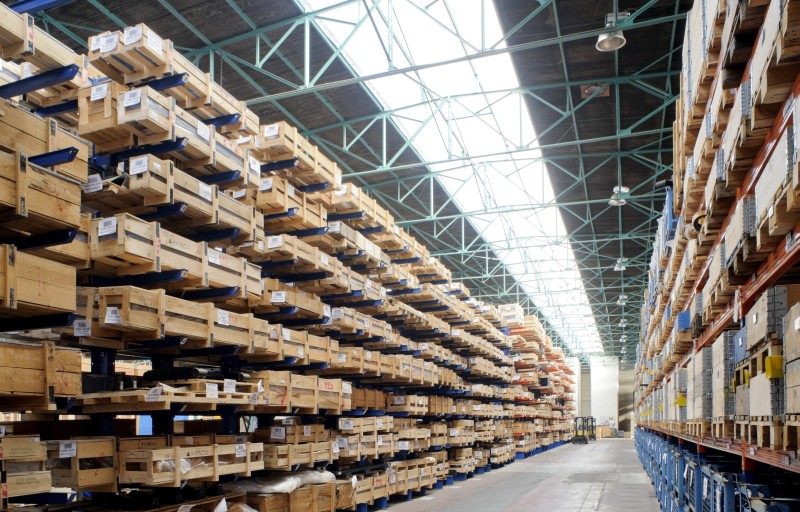
With the advent of 3D printing, we are on the cusp of witnessing a radical shift in the role (and relevance) of a centralized spare parts room. Companies throughout the world will begin to realize the benefits of 3D printing as a decentralized solution that can solve their operational needs, without the added headache of inventory management and storage space.
An extreme example of this fundamental shift is Space Exploration. The costs and time associated from relying on Earth for replacement and spare parts in Space creates the perfect environment for 3D printing technology to present a major disruption. 3D printers can work in a zero-gravity environment while providing the flexibility of applications non-reliant on a centralized on-board skillset, but rather all of Earth’s abilities. In a recent study, NASA found that 30% of parts aboard the International Space Station could be manufactured using a 3D printer (SPACE.com, 2020). This also leads to the broader application of 3D printing and its ability to not only make spare parts but also be used as an additive manufacturer to help remote businesses become increasingly self-reliant while reducing storage and resupply costs. Although this out of world example highlights the conveniences the 3D printing opportunity offers in extreme situations, there are multiple applications and cost savings benefits here on Earth as well.

Precisely where the value is distributed through these newfound efficiencies will be an extremely interesting event to witness unfold – current models promote the centralized part manufacturers as well as shipping companies facilitating the exchange. In the near future, it seems likely that companies will be looking for convenience, forcing centralized part manufacturers to change their business model, switching to a platform and service provider for fear of obsolescence or declining market share. By decentralizing the actual manufacturing, the producers will have to find new ways of monetizing their product designs, as well as any associated services.
One vein to explore would be partnerships with 3D Printer Manufacturers and creating incentives for their customers to use a specific partner-brand. This would benefit the part producer and ensure high-quality of products produced, as well as create a potential for ongoing revenue through printer leasing, or some sort of software-like subscription model applied to physical parts. Acknowledging that not all customers want, or are able, to spend money upfront to buy an industrial 3D printer, offering a turnkey solution with low up-front costs will be paramount in the value proposition. Having the expertise of the printer manufacturer as a partner in the transaction should help ease quality or lack of familiarity (3D skillset) concerns for customers.
Secondly, parts producers will need to explore creating a platform to securely share their designs with the 3D printers, while ensuring they are able to monetize the printing of those components. Here there is some flexibility as parts can be costed per piece, or monthly/yearly subscriptions plus materials for higher volume industries. As 3D scanning technology continues to evolve, simple pictures coupled could allow for a part to be “repaired digitally” and sent to the printer anywhere in the world, significantly reducing costs associated with on site expertise, shipping, designing, and manufacturing. Lastly, as we have become accustomed to software updates, we may begin to see hardware upgrades become available through this technology.
Creating a network of parts producers would create an ecosystem whereby any facility could enter the network and print parts they know are already approved by the OEM, which would create significant value for customers and help justify a subscription fee to join the platform. The network effect would be a large driver for this platform’s scale and growth. Given 3D printers do not benefit from economies of scale, but rather low volume high customization parts, distributing these costs amongst a variety of potential applications can help drive adoption rates. Coupled with increased printer efficiency as well as materials available, corporations will begin to see the convenience and cost savings opportunities.
As with any emerging technology there are significant risks associated with the adoption of 3D printing. A major risk is who holds the liability if a 3D printed part breaks and/or causes significant damages. The risk of design, manufacturing, or incorrect application all create a legal complexity of blame and liability across multiple parties in this decentralized model. Another major risk is the loss of proprietary information, this not only poses financial risk but also the potential for a variety of nefarious activities including intentional sabotage through design changes. Although there are a myriad of risks associated with 3D printing, implementing a type of supply chain validation and verification through blockchain would be a great avenue to help all parties mitigate some risks. Overall, component design ownership, specified printer type(s), as well as adequate application warnings will be a necessary part of any agreement structured in this decentralized model.
 Strategy in the Age of Decentralization