What is MaaS?
Mobility as a Service (MaaS) is a recent emerged business model in the transportation sector that have been gaining attraction in the last few years. There are many visions of it, but most include a usership-based, personalised, end-to-end transport service, via any mode(s), with a single payment and hassle-free journey planning and management. It integrates various transport options including public transport, bike-sharing, car-sharing, taxi and any other possible transportation service into a single mobility service to meet a customer’s request.
Benefits of MaaS?
The aim of MaaS is to enable more efficient use of transport systems and potentially provide an alternative to the use of the private car that may be as convenient, more sustainable, cheaper and help to reduce congestion and constraints in transport capacity.
For the passengers, MaaS can offer added value through use of a single application to provide access to mobility, with a single payment channel instead of multiple ticketing and payment operations. In addition, MaaS provider can purchase transport services in bulk to have competitive price and potentially reduces the cost for the individual travelers. For the transport operators, MaaS can offer the access to improved user and demand information and provide them with new opportunities to serve unmet demand. Particularly, MaaS providers may improve the problems of low utilization among transport operators by providing passengers with a seamless journey to disincentive them to use private cars. This would contribute to the overall transit network in a region. For example, the MaaS provider UbiGo in Sweden did a trial in Gothenburg. Many private cars were deregistered for the duration of the trial and utilization of existing transit services increased. For transport authorities, they will be able to obtain a more comprehensive database through an integrated MaaS platform and make more informed decisions by analyzing the data.
Is MaaS the perfect transportation solution for the coming decade?
There are some doubts. This model inherits two major issues with regards to equality and privacy- unless addressed, that would hinder the model’s sustainability.
Firstly, the current MaaS business model is virtually a centralized model. Most of the centralized models will eventually lead to issue of unequable value distribution that would limit their social and economic benefits. For a centralized model to achieve its maximum potential, the fewer MaaS providers exist in one city/market, the better MaaS platforms are able to consolidate the resources. However, the lack of competition will lead those few dominant players to have more control over market. Not only they will be able to collect the value that is actually created by transport providers but also have the power in deciding who gets to join the platform and on what term.
Secondly, the ability of providing individually tailored transportation service is one of the competitive advantages of MaaS model. To enable customization, massive personal data will need to be shared with MaaS providers. However, global awareness over privacy issues deriving from data-sharing has been rising in recent years and it might become an inhibitor to further expansion of MaaS. Currently, we have little clue about what organizations our data gets to and how those organizations handle our data. The lack of control over their personal data will certainly lead to some crisis further down the road hence imperil MaaS model’s viability.
So, is there cure?
The answer is YES. Blockchain technology provides the opportunity to address both of the inherent risks that embedded in the current MaaS model and helps shape MaaS towards a decentralized direction.
Primarily, the core attributes of blockchain technology could cut out the intermediate centralized platforms and redistribute power and value to all the users in the network with greater equality. An open source blockchain MaaS platform could be developed without the control of any powerful intermediaries, see Figure 1. Any transport operator or individual service provider, e.g. a Uber driver could join the network freely to provide mobility services. It ensures the competition and guarantees the service quality as any company or individual that does not match the standards will be voted out the network eventually by all other members. Furthermore, by removing the intermediary, all members of the network take the obligation of operating the platform such as validation of completed journeys through consensus. In some cases, smart contracts could be employed to trigger the transfer of the funds. All above will contribute to reducing the cost for both transport service providers and passengers.
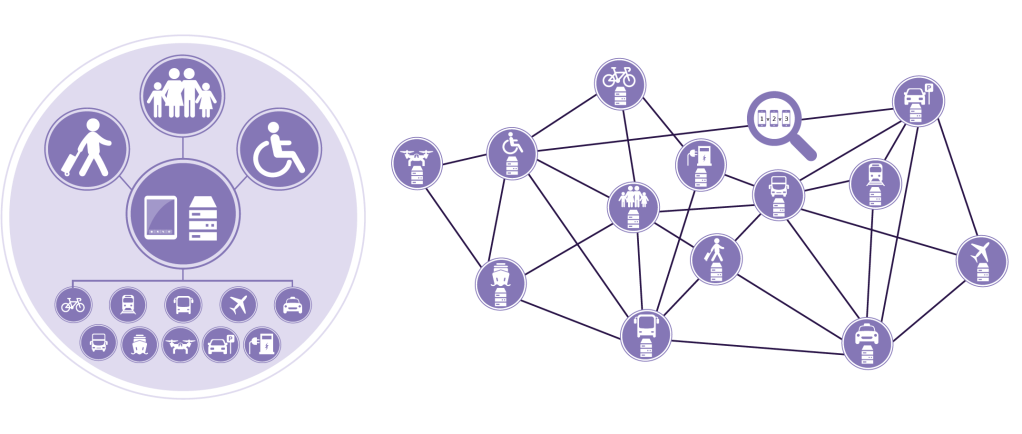
Figure 1 Centralized v.s decentralized MaaS model
As to data privacy, blockchain technology will not only give service users greater control and visibility over their personal data but can also reward them by sharing their data. Customers could access to the network through a portable blockchain mobility account, enabling them to control over their identity and other data. A project using blockchain technology conducted in UK by multiple organizations including TravelAI and Gospel proved that passengers were able to detect what organizations, e.g. transport authorities or fleet operators, their data had gone to and how those organizations handled their data. More encouragingly, users could be rewarded, e.g. discounted journeys, by giving consent for the use of their personal data. See Figure 2.
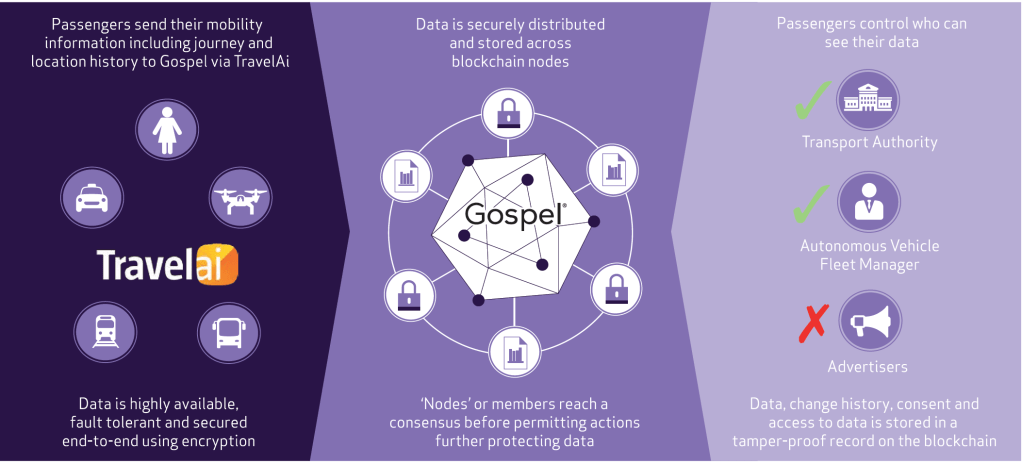
Figure 2 Personal transport data sharing using blockchain
In conclusion, the value that blockchain technology and decentralization model can bring to MaaS could create a competitive advantage consists of:
Network Efficiency
- ensures new entrants, no matter big or small transport operators, to serve the customers directly, reducing inefficiency in the system and increasing competition.
Transparency and Trust
- provides customers with journey options that is fair, open and transparent. through a shared immutable database with smart contracts
- ensures transparency on rules of operation and fares, increasing trust.
Data Security and Privacy
- improves the protection of the personal data collected and with this technology, users can encrypt a file totally or partially and control over what parties their data will be shared with.
Therefore, the decentralized MaaS network equipped with blockchain technology can establish a transportation ecosystem with greater social equity and data security that would benefit all the players including passengers, drivers, transport operators and transport authorities.
Reference
2. https://www.omos.io/wp-content/uploads/whitepaper/OMOS_concept_paper.pdf
3. https://www.iberdrola.com/innovation/blockchain-for-smart-cities-urban-management
 Strategy in the Age of Decentralization