In 2018, many data breaches occurred across the world causing financial loses. According to World Economic Forum report in 2016 titled “A Blueprint for Digital Identity”- ineffective identity systems create global challenges for people, business and society. With proper use of blockchain backed Digital Identity (Digital ID) in emerging and mature markets, economic values can be created across the globe.
What is digital identity?
Block Chain, the distributed ledger technology behind digital ID has the potential to revolutionize everything from currency to supply chain. It is known as General Purpose Technology such as the electricity, steam engine and internet. It is decentralized, consensus driven, and transparent. It allows the users to store the information in digital form.
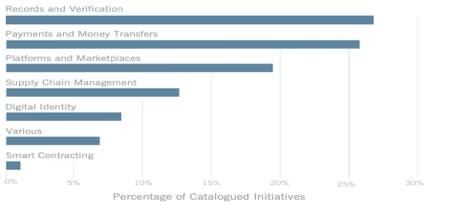
Figure 1 above shows the primary ways in which Block Chain is used
A person or a thing has multiple identities- social, physical and digital. According to technopedia.com – “A digital identity is an online or networked identity adopted or claimed in cyberspace by an individual, organization or electronic device. These users may also project more than one digital identity through multiple communities”. Digital ID is one of the rising components of the digital economy. It allows an entity to manage its own identity. The importance of digital identification is massive. Digital ID architectures perform three major functions- identification, authentication and authorization (Figure 2).
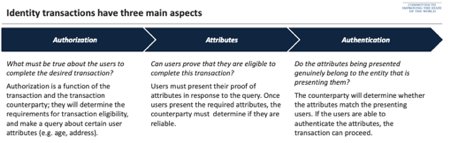
Figure 2 Three aspects of identity
Digital identity has a number of use cases in financial services, healthcare, e-commerce, government, gaming, media, and travel industries. Some of them such as ID4D project sponsored by Word bank (2019), Rohingya Project (2019), 5rights Foundation (2019), and Pandya (2019) have been prominent in the humanitarian context as well. Using block chain for digital ID has two benefits. First, individuals have better control over their information and second, they are more reliable than the traditional identity systems.
Issues found within typical identity management systems include
- Bad password protection
- No regulations for access restriction
- Low security for identities in devices and browser
- Same repetitive KYC or registration process
- Multiple administrative models for multiple application creates inconsistency
- Identity risk from online platforms
- Weak authentication protocols
Blockchain uses decentralized identity i.e. there would be no entity or centralized authority issuing or claiming over any kind of identity. An entity’s identity will be solely its to claim. Some of the areas where blockchain enabled firms are working are biometrics, customer identity management, due diligence process, and self-sovereign KYC. Blockchain creates trust by solving the following- Identity problem, ownership problem and verification problem for data.
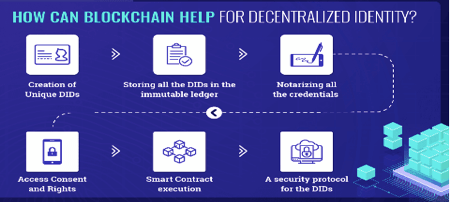
Figure 3 Process of how Blockchain helps decentralized identity
Benefits of implementing digital identity
Digital identity is somewhat equivalent to a physical passport or id card. It is a system that helps address the inefficiencies associated with manual validation processes and help contribute to protecting both citizens and agencies from identity-related risks such as fraud and theft. Not only it contributes to the economic growth, but it also removes the limitations on services which require identification. A number of stakeholders -internal ( users, identity providers and relying parties) and external (government and regulators) can reap the benefits from this. Together these lead to economic betterment.
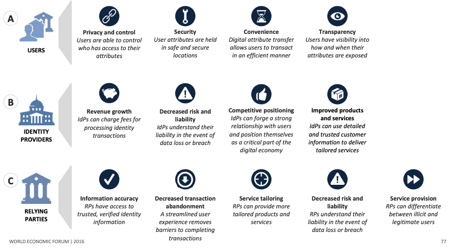
Figure 4: Benefits for internal stakeholders
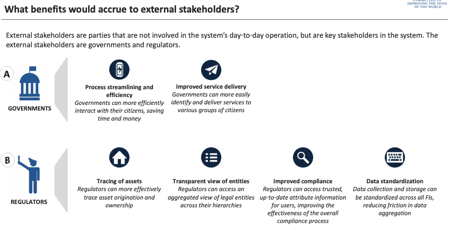
Figure 5 : Benefits for external stakeholders
Other benefit of using digital IDs include reducing cost. It also enables lowering the financial and physical barrier for the inclusion of previously excluded societal groups. For example, 309 million new bank accounts opened in India through reduced costs in digital KYC.
Opportunity for digital IDk

Figure 6 Potential for creation of legal entity
By 2030, Digital ID has the potential to create economic value equivalent to six percent of GDP in emerging economies on a per-country basis and thirteen percent in mature economies, assuming high levels of adoption (Figure 7).Correct usage of Digital ID can lead to creation of economic and non-economic values.
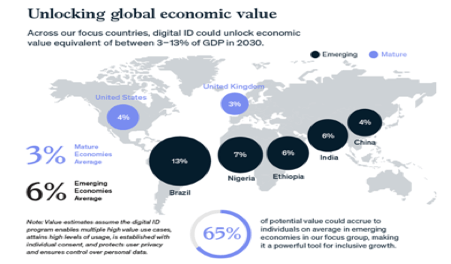
Figure 7 Impact of digital identity on GDP in 2030
Digital ID creates value differently in emerging and mature markets. An emerging market would require basic digital ID and a mature market would require advanced digital IDs along with the right infrastructure. The qualitative value can be measured through inclusion, rights to education,
Future Outlook
Capturing value through digital ID is difficult and not certain or automatic. Some of the challenges that need to be worked upon are dividing into three buckets 1) user perspective: building trust amongst the user, 2) business Perspective: succeeding in a two-sided market and 3) regulatory perspective: dealing with legal uncertainty and regulatory complexity. Building robust systems that can mitigate the risks associated with large-scale capture of personal data or systematic exclusion should be the focus area.
To derive the projected economic benefit in future, more individuals and institutions need to adopt digital ID on a day to day basis. Basic digital IDs would be beneficial for emerging markets and advanced digital IDs for mature markets. Simultaneously, governments, businesses and civil societies should be thoughtful about the potential misuse of this technology.
Sources
Click to access WEF_A_Blueprint_for_Digital_Identity.pdf
https://www.binance.vision/blockchain/blockchain-use-cases-digital-identity
https://www.gemalto.com/govt/identity/digital-identity-services/trends
https://procivis.ch/2019/06/11/the-economic-potential-of-digital-identity/
 Strategy in the Age of Decentralization