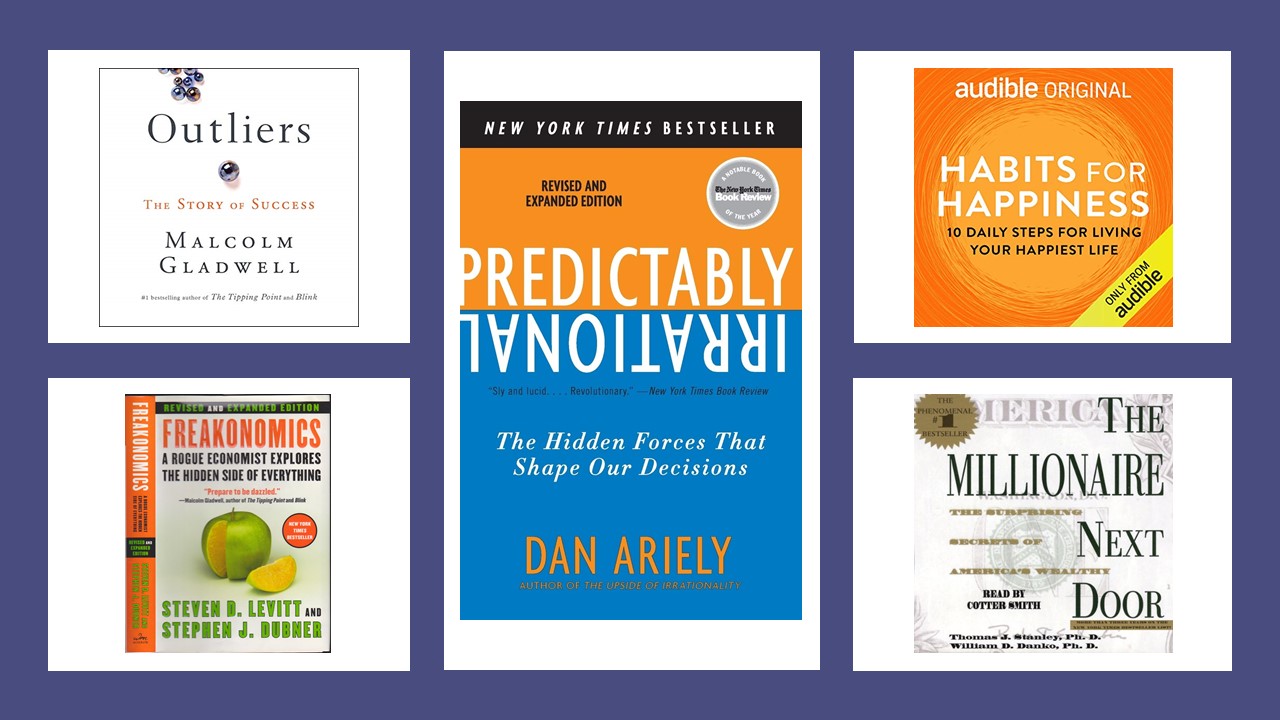
While the humankind is fighting the deadly COVID-19 pandemic and several people are restricted indoors, I suddenly found myself having all this time that I never seemed to find. So I steadfastly decided that I will not let this opportunity pass and utilize this sudden emergence of time in a fruitful manner. And what better way than to dabble into my long-lost love for reading books.
So I ambitiously resolved that by the end of 2020, I will make sure to read/listen to 50 books. Thus began my social distancing period in mid-March by resorting to extensive reading/listening of books/audio books respectively. Through some preliminary internet research and friendly recommendations, I stumbled upon an initial list of 5 books. These books delved into diverse topics including psychology, behavioral economics, financial management and good old self-improvement.
Despite intermittent periods of tardiness, within a span of about a month I had sifted through all of them. This was a thoroughly enjoyable experience for me and I felt excited about sharing my key takeaways with others. Thus follows this post through which I endeavor to share some of the nuggets that I gleaned from these awesome texts. Please note that the accompanied text comprises my personal takeaways and may very well differ from those of others. Also, I have provided my own rating of these books to express my preference. These ratings might very well differ from those of experts. Most of these books have been in popular circulation for sometime now and I apologize for this late review. Anyways, let’s dive into it!
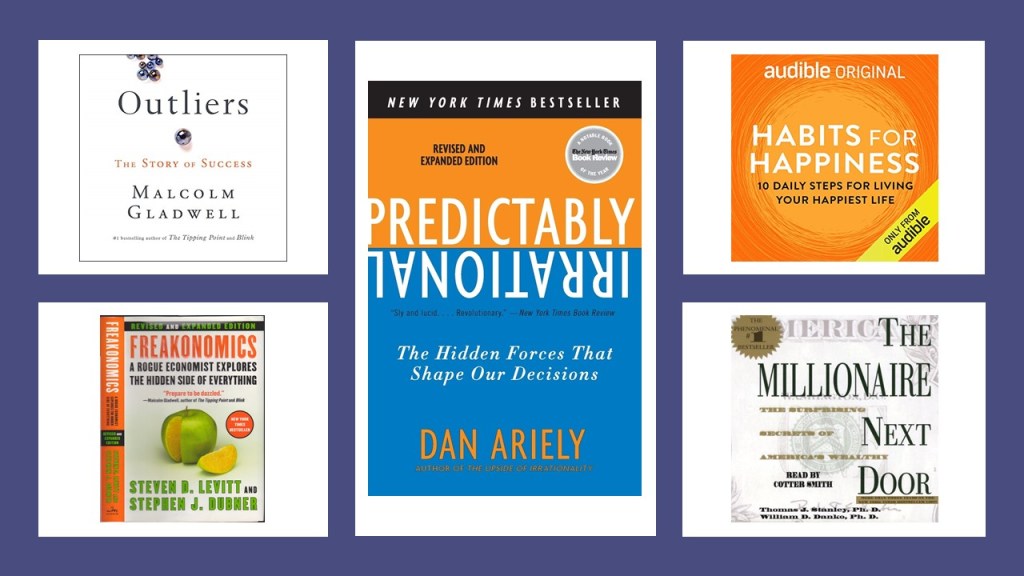
- Predictably Irrational by Dan Ariely (9.5/ 10)
This book is arguably one of the best reads I have done in a long time and is a gem in the area of behavioral economics. The book demonstrates how humans exhibit irrational behavior with confounding consistency in certain circumstances though rational behavior might suggest otherwise. This fact seems to flout the traditional rules of economics which propagates the idea of Homo Economicus individuals.
This irrationality serves as a jackpot for the likes of marketeers to further their ends and may be used for manipulating the uninitiated by the shrewd. The book shares several interesting experiments that the author devised to test hypotheses on honesty, procrastination, arousal and several other interesting topics. The best thing about the book is that it imparts practical knowledge that may be readily applied. For me the key takeaway from the book is to acknowledge our human frailties. Hence before making that next decision which seems all so natural and no-brainer, just take a moment to think through it.
2. Freakonomics by Steven Levitt & Stephen Dubner (8.0/10)
Another book that I read in the behavioral economics domain, which I first heard of almost 10 years ago, is the immensely popular Freakonomics. I am embarrassed to admit that I only read this book now, given that I heard rave reviews about it from my friends over the past so many years.
However, frankly speaking it was bit of a let-down. Partly because I had read Predictably Irrational(PI) only a few days before this. While PI offered tangible insights that can be put to use in our daily lives, Freakonomics is more of post-mortem analysis of key past incidents.
It holds data as sacrosanct and discusses in detail key critical thinking tools such as correlation, causation and analyzing incentives through the help of various examples. While it does freak you out by presenting weird correlations between seemingly disconnected topics such as abortion and crime-reduction, however it doesn’t provide one unifying theme, which the writers do acknowledge. What it does provide though is an immensely useful approach to think critically, see the larger picture, ask the right questions, and inform decisions by data.
3. Outliers: The Story of Success by Malcolm Gladwell (8.7/10)
This is again a masterpiece from a masterful researcher. If there were one word that can capture the essence of the book, it will be ‘Matthew Effect’, oops that’s two words! Matthew effect basically originates in Bible and states that those with advantages will progress in life while those dealt an unfortunate hand will be further disadvantaged. This shatters the rags-to-riches image of several celebrities. Not very encouraging right?
Yet we see examples of the same all around us. But if everything’s dependent on fate then what the heck are we doing in the first place reading this book, right? Well, although the book postulates that success is a function of accumulated advantage over long periods, disadvantaged individuals can become successful if exposed to right set of conditions and circumstances. And how does one do that?
As per my understanding it is all about exposing yourself to right environment, meeting the right people and nurturing relationships. These steps might serendipitously open doors of success for you. This fact dovetails well with the ‘networking’ aspect of MBA recruitment :P. Maybe I am being over-simplistic but well that’s me.
4. The Millionaire Next Door by Thomas Stanley & William Danko (7.5/10)
Again, this is quite an old book however it’s an essential read for anyone planning to become rich. Although it gets repetitive in its tone and may seem to induce a slow death by numbers, it does deliver a powerful underlying message.
‘Frugality’ is the key to becoming rich. A lot of people, especially my generation, believe that becoming a millionaire is largely a function of getting a high-paying job and commanding a high salary. But through research and data this book debunks this myth and exalts financial discipline as the key mantra for wealth building. In fact, most of the millionaires don’t indulge in ostentatious display of wealth and maintain a low profile. To your surprise often the person one would never imagine to be a millionaire might turn out to be one. So in essence almost anybody is capable of building wealth given the right attitude and discipline.
5. Habits for Happiness by Dr. Tim Sharp (7.8/10)
I listened to this audio book on Audible and it was an absolute delight. Although very simple in its message and outlined approach it serves as a good reminder of how we can be happy by leading a physically, mentally, and socially healthy life. In a fast-paced world wherein we are always chasing happiness outside, this book reminds us that happiness lies within us. It’s a simple yet charming audio book and highly recommended to listen to in these uncertain times to reduce anxiety.
Hopefully through this recollection I was able to share with you the key messages of these amazing books and whet your appetite to read these inspiring books. I look forward to continuing this journey with more interesting reads in the coming weeks and months. Till then, happy reading!
 Strategy in the Age of Decentralization